
CineGhost Movie Picture Trivia
Stefano SolinasTrivia
0.00.00 Reviews
- Version
- 2.1.5
- Installs
- 10.00K
- Age Rating
- Teen
Screenshots
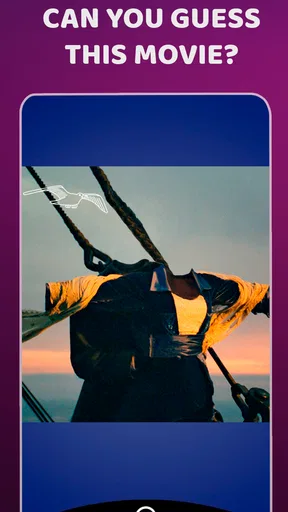

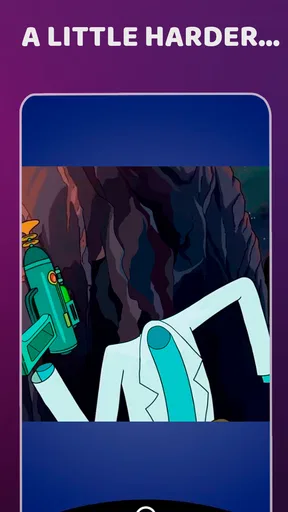
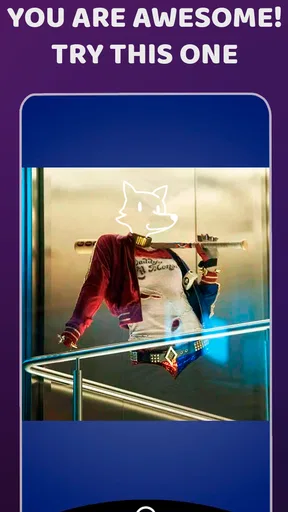
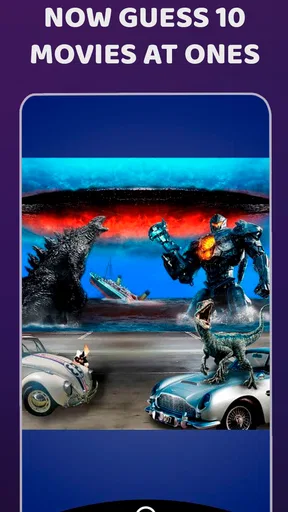
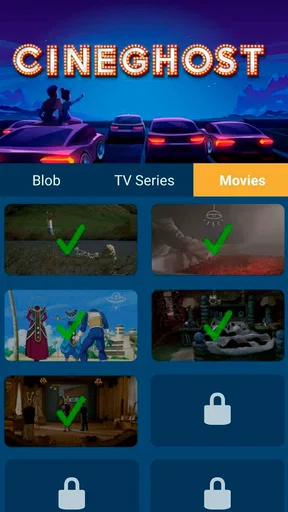
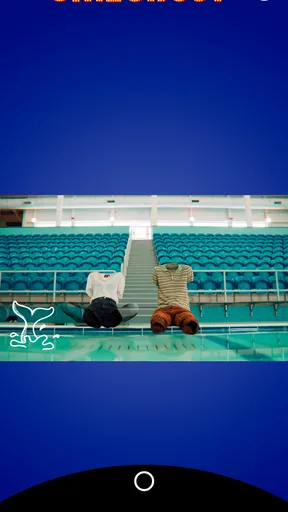
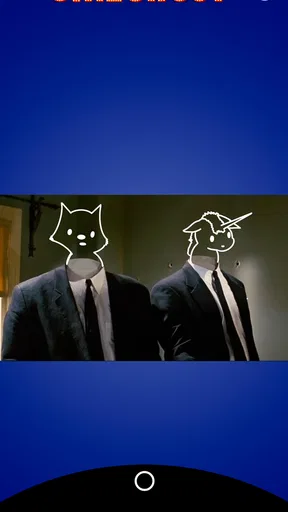
Our Review of CineGhost Movie Picture Trivia
 Analysis by Appyee
I went into CineGhost Movie Picture Trivia expecting a quick movie quiz, and that is exactly where it works best: as a focused test of visual recognition rather than a broad film database or a full trivia show. Each challenge asks me to identify a movie from a scene image, so the pleasure comes from noticing small visual clues before the answer becomes obvious. It is a simple idea, but it creates a surprisingly personal kind of competition. I am not only testing what I remember about films; I am testing whether I can read a frame.
The game is free, belongs to the trivia category, and was developed by Stefano Solinas. It is aimed at Teen players, which feels appropriate for a quiz built around cinema references that may cover a wide range of films. The current version is 2.1.5, and the game can be used offline, an important detail if I want something for a journey, a waiting room, or a place with unreliable reception. Optional in-app purchases range from $1.49 to $28.99 per item, so I would treat the free download as the starting point and look carefully at any purchase prompt before confirming it.
My first impression: a quiet movie challenge rather than a noisy quiz show
The strongest part of the first impression is the restraint of the concept. There is no need to learn a complicated control scheme, build a character, or understand a fictional universe before playing. I see a picture, study it, and make a choice. That directness makes the game easy to pick up when I have only a few minutes, but it also means the quality of the images and the fairness of the clues matter more than they would in a larger game.
Visual trivia has a different feel from questions that ask for an actor, director, release year, or quotation. A scene can give me several clues at once: clothing, lighting, architecture, props, color grading, a recognizable face, or the general mood of the shot. Sometimes the image points immediately to a familiar film. At other times, I have to separate useful evidence from details that are only there to create atmosphere. That makes each answer feel closer to visual detective work than ordinary recall.
I also like that the game can fit into small spaces in my day. I can play a few rounds while waiting for an appointment without committing to a long session. Offline play makes that more practical because I do not have to plan around a connection. For a movie fan, it is an easy companion during travel, especially when I want something more engaging than scrolling through the same social feeds.
There is a trade-off in this narrow design. Someone looking for a complete cinema companion, detailed explanations, film facts, or a large social competition may find the experience too lean. The appeal depends on enjoying the act of guessing from a single image. If I prefer trivia that explains why an answer is correct, or if I want questions across music, history, science, and sport, another quiz app will probably offer more variety.
What the image is really asking me to notice
The useful habit is to avoid guessing from the most obvious face in the frame. I first look at the setting, then the objects, then the lighting and composition. A hallway, a particular vehicle, a period costume, or an unusual color palette may be more reliable than an actor I think I recognize. This approach makes the game more satisfying because I am building a repeatable method instead of relying entirely on lucky memory.
Another practical technique is to describe the scene silently before choosing. I might note that it looks like a night interior, that the characters are dressed in a specific period, or that the image has the visual language of a thriller rather than a comedy. That short pause helps when several answers seem plausible. It also turns the game into a small exercise in film literacy, not just a memory test.
The opposite method is useful when I am playing with friends. I can show the image without immediately discussing every detail and let each person make an independent guess. The game works naturally as a shared conversation starter because one person may recognize an actor while another notices the location or production design. Even when the answer is missed, the disagreement can be entertaining.
The visual language gives the game its identity
Because the central material is a movie frame, the art direction is not separate from the mechanics. The image is both the setting and the question. A strong frame creates a small world in an instant: a room can suggest a period, a street can imply a genre, and a carefully placed prop can reveal more than a caption would. That gives the quiz a mood that ordinary text-based trivia often lacks.
I find the best moments happen when the scene is recognizable without being completely obvious. If the picture gives away the title immediately, the round becomes a reflex. If it is too obscure or visually generic, the answer feels detached from skill. The sweet spot is a frame that rewards attention and film knowledge while still leaving room for uncertainty. That balance is central to whether a particular session feels clever or frustrating.
The visual approach also favors people who remember movies through images. Some viewers retain dialogue, plot details, or soundtrack moments more easily than compositions. For them, this may feel less fair than a question-based quiz. I would recommend trying it with an open mind, but I would not choose it as my main trivia game if my strongest cinema knowledge is about production history rather than what appears on screen.
How the mood, rhythm, and mechanics work together
I find the game’s calm, image-first approach most satisfying when I give each frame a moment instead of treating every round as a race. The mechanics keep attention on observation, while the mood leaves room to explain a guess or reconsider it with a friend. That balance makes the experience feel like a small film-club conversation, and it also clarifies what kind of player will get the most from it.
Sound and rhythm without overwhelming the picture
The game’s mood is naturally quiet and observant. Even when I am playing quickly, the central action is looking. That creates a different rhythm from trivia games built around countdown pressure, bright reward effects, or constant prompts. I can settle into a pattern: inspect the frame, form a theory, choose an answer, and move on. The pacing feels best when I treat it as a short sequence of visual puzzles instead of trying to rush every round.
This slower attention is valuable because sound should not have to carry the experience. In a movie quiz, the image is the performance. A busy interface or overly forceful audio design could distract from the clues, while a more controlled presentation supports the feeling of browsing through fragments of cinema. I appreciate games that understand when not to compete with their own core material.
That rhythm also makes the game suitable for different moods. I can play it casually while relaxing, or I can make it more competitive by keeping track of my own accuracy from session to session. With friends, the pauses before an answer become part of the fun. The game does not need a complicated party mode to create discussion; the scene itself gives everyone something to examine.
There is a limitation here too. Players who want constant escalation may find the experience too calm. The appeal is not based on dramatic progression or a large amount of mechanical variety. Its momentum comes from moving through one visual challenge after another. If I am in the mood for fast reactions, character upgrades, or a story campaign, this is not the right kind of game.
The mechanics fit the promise, but they stay deliberately narrow
The core interaction is easy to understand: identify the movie shown by the picture. That clarity is a major strength. I never feel that the controls are getting in the way of the quiz, and I can concentrate on the evidence in front of me. For a casual player, the learning curve is almost immediate, which is exactly what I want from a game designed for short sessions.
The downside is that the same simplicity can expose the limits of the format. Once I understand how to inspect a frame, the main source of variety is the image and the movie knowledge required. There is no need to master a deeper system, and players who enjoy strategic layers may run out of novelty sooner than film fans who enjoy collecting recognizable moments.
I would also keep the purchase model in mind. The game is free to start, but optional items cost between $1.49 and $28.99 each. That does not automatically make the experience poor, but it means I would play naturally before spending anything. A good personal rule is to decide whether the free version already provides enough enjoyment for my usual sessions. If I feel pressured to buy in order to make basic progress, I would stop rather than treating the purchase as necessary.
The game runs on Android 7.0 or later, which covers older devices that are still in everyday use. That broad compatibility is helpful for a lightweight quiz, particularly if I want to keep it installed on a secondary phone or an older tablet. The practical advantage is less about technical spectacle and more about accessibility: the game does not need to be reserved for a recent flagship device.
Offline play changes where I would use it
Offline access is one of the most useful parts of the package in ordinary life. I could open it on a train, during a flight, in a basement waiting area, or while traveling abroad without depending on mobile data. That makes it more dependable than trivia games that are built around live rankings or constant network checks.
A realistic scenario would be a long journey with a friend who enjoys films but does not want to watch an entire movie on a small screen. We could take turns studying each image, explain what clue led us to an answer, and keep the conversation moving. The game would not replace a proper film night, but it could fill the quiet gaps before arrival. It also works alone when I want a short mental break without loading a larger online game.
Offline play has a social trade-off: it is convenient for local conversation, but it does not create the same shared experience as a live online quiz with remote players. If I specifically want global leaderboards, real-time matches, or a constantly changing community challenge, I would choose a connected alternative. CineGhost is better when independence and simplicity matter more than online competition.
Who will enjoy it, and who should skip it
I would recommend this game to people who recognize films through cinematography, costumes, locations, or memorable frames. It is also a good fit for casual players who want a free starting point, a short-session format, and the option to play without an internet connection. Movie clubs, couples, and friends who like debating answers can get extra value from the same image because it encourages explanations rather than silent tapping.
I would be more cautious if someone wants a structured learning tool. The game’s central pleasure is guessing, not studying a lesson about film history. A person who wants director biographies, genre timelines, cast information, or detailed answer notes may be happier with a film reference app or a more educational quiz. Likewise, viewers who rarely remember visual details may find the challenge harder than a text-based movie game.
The Teen content rating is worth considering for families. I would not assume that every image suits younger children simply because the controls are simple. Parents should decide whether the film references and scenes match the age of the person using it. For teenagers and adults who already enjoy cinema trivia, the rating feels like a sensible boundary rather than a problem.
What I would do before settling into regular play
I would begin without trying to answer at maximum speed. The first few sessions are more useful if I learn how the game presents its visual clues and how often my first impression is reliable. I would pay attention to whether I am identifying films from actors, settings, genre signals, or small props. That tells me what kind of movie knowledge I actually have and makes later rounds feel more intentional.
For a group session, I would establish a simple rule: everyone gives an answer before anyone explains the clue they noticed. That prevents the quickest observer from solving the round for everyone else. For solo play, I would avoid searching for answers immediately after a miss. The memory gap is part of the challenge, and trying to reconstruct the film from the frame is more rewarding than turning the game into a lookup exercise.
I would also keep purchases separate from enthusiasm. Because the game is free, it is easy to test whether its visual format genuinely suits me. If I enjoy the core loop after several short sessions, optional spending becomes a personal choice rather than a gamble. If I do not enjoy identifying movies from still images, no extra item is likely to change that basic preference.
How it compares with familiar trivia alternatives
Compared with a general knowledge quiz, this game is much more focused. That is both its identity and its limitation. General quizzes offer more subject variety and may be better for mixed groups, while this one gives movie fans a clear reason to pay attention to the screen. It feels less like answering facts from a database and more like recognizing a visual signature.
Compared with a film database, it is far more playful and much less useful for research. I would not open it to check a cast list or settle a release-year argument. I would open it when I want to test myself. Compared with a live multiplayer quiz, it is calmer and more flexible because offline play does not depend on everyone being connected at the same moment.
Compared with a standard guessing game based on titles or text clues, the image-first design rewards a different skill. Someone who knows plot summaries may not always have an advantage, while someone with a strong memory for production design may perform brilliantly. That makes it a good change of pace for a group already tired of conventional movie questions.
My atmosphere verdict
After spending time with it, I see CineGhost as a compact visual movie challenge with a coherent mood. Its setting is created by the frames themselves, its rhythm comes from careful observation, and its mechanics stay out of the way. That unity is the reason the simple design works: the game asks me to look at cinema, and nearly every part of the experience supports that action.
It is not the best choice for players who need elaborate progression, broad trivia coverage, detailed film education, or online competition. The narrow format can feel repetitive if I am not genuinely interested in recognizing movies from individual scenes. The optional purchase range also gives me a reason to remain deliberate rather than tapping through prompts automatically.
Still, I would keep it installed for the situations it handles well. The free entry point, offline availability, support for Android 7.0 and later, and short visual rounds make it practical. With more than 10 thousand installs, it has found an audience without needing to pretend to be a huge all-purpose game. Released on April 20, 2020, and maintained at version 2.1.5, it presents a focused idea rather than an overloaded one.
My recommendation is simple: choose it if the pleasure of a movie comes partly from how it looks. I enjoy the moments when a color scheme, room, costume, or tiny object brings a title back to mind. That feeling is more specific than ordinary trivia and more relaxed than a competitive quiz show. For film fans who want a portable, offline way to exercise visual memory, it is worth trying for free before deciding whether it belongs in their regular rotation.
Verdict
Strengths of CineGhost Movie Picture Trivia
- Quick trivia rounds are ideal for short breaks.
- Covers a wide range of movie titles and genres.
- Simple controls make it easy for casual players.
- Recognizing visual clues feels rewarding for film fans.
- Lightweight gameplay should run well on most devices.
Limitations of CineGhost Movie Picture Trivia
- Some questions may feel too easy for dedicated movie buffs.
- Limited appeal if you rarely watch mainstream films.
- Replay value can drop after familiar images appear.
- Progress may depend heavily on remembering specific scenes.
- Ads or in-app purchases may interrupt the experience.
Similar Picks in This Category
View All
Millionaire 2026 Quiz & Trivia
Quiz & Trivia Games by Submarine Apps4.5

Brain Test 2: Tricky Stories
Unico Studio4.7

Trivia Crack: Brain Quiz Games
etermax4.4

QuizzLand. Quiz & Trivia game
Quiz & Trivia Games by Mno Go Apps4.8

Brain Test: Tricky Puzzles
Unico Studio4.7

Logo Quiz
bubble quiz games4.5
Frequently Asked Questions
What is CineGhost Movie Picture Trivia?
CineGhost Movie Picture Trivia is a movie-themed quiz game that challenges players to identify films from visual clues, including pictures, scenes, characters, or other recognizable details. It is designed for casual play and movie fans who enjoy testing their knowledge across different genres and eras. The exact question formats and available categories may vary depending on the app version and updates.
How does the gameplay work in CineGhost Movie Picture Trivia?
The basic gameplay involves viewing a movie-related image and selecting or entering the title you believe matches it. Correct answers allow you to continue, while difficult questions may require hints or additional attempts, depending on the game’s rules. The experience is simple to understand, making it suitable for short sessions, although the challenge can increase as you progress through more advanced questions.
Does CineGhost Movie Picture Trivia require an internet connection?
An internet connection may be needed for downloading the game, loading certain content, displaying advertisements, synchronizing progress, or accessing updated trivia questions. Some parts of the game may work offline after installation, but this should not be assumed for every feature. If you plan to play while traveling or without mobile data, check the app’s current store description and test offline access after downloading.
Is CineGhost Movie Picture Trivia free to download and play?
CineGhost Movie Picture Trivia may be available as a free download, but free access can include advertising, optional in-app purchases, limited hints, or other restrictions. The precise pricing model can change with updates, regional availability, or platform differences between Android and iOS. Before starting, review the store listing carefully so you understand whether any purchases are required to unlock content or remove advertisements.
Is CineGhost Movie Picture Trivia suitable for children and all movie fans?
The game can be enjoyable for children, teenagers, and adults who recognize popular films, but suitability depends on the images, movie references, and content included in the question database. Some titles may contain mature themes or scenes, even if the quiz itself is family-friendly. Parents should review the app’s age rating, privacy information, advertisements, and in-app purchase settings before allowing younger players to use it.
Play our best games!


